Advisory Board

Patrick Schultz
Catherine B. Cramer
Patrick Schultz
Patrick Schultz is the Chief Executive Officer of Business Professionals of America (BPA) and a nationally respected leader in Career and Technical Education (CTE) and workforce development. A long-standing member of the BPA community, he has served in a range of leadership roles, including chapter advisor, Chair of the National Board of
Patrick Schultz is the Chief Executive Officer of Business Professionals of America (BPA) and a nationally respected leader in Career and Technical Education (CTE) and workforce development. A long-standing member of the BPA community, he has served in a range of leadership roles, including chapter advisor, Chair of the National Board of Trustees, and Director of Membership and Technology.
Under his leadership, BPA has experienced significant membership growth and an enhanced student experience, with a strong focus on career readiness, skills development, and alignment with workforce needs. Patrick has led efforts to expand virtual programming, strengthen advisor and employer networks, secure strategic sponsorships, and build partnerships that connect education with industry. His student-centered, innovation-driven approach continues to position BPA as a vital pipeline for preparing learners for success in a competitive, evolving workforce.

Brandon Jones
Catherine B. Cramer
Patrick Schultz
Brandon Jones is the 2025-2026 AGU President. He was elected to the AGU Board of Directors in 2017 and has been a volunteer leader on AGU's Talent Pool Task Force, Leadership Development and Governance Committee and Strategic Plan Writing Team.
As a federal scientist, Jones has dedicated more than 20 years to expanding access to STEM
Brandon Jones is the 2025-2026 AGU President. He was elected to the AGU Board of Directors in 2017 and has been a volunteer leader on AGU's Talent Pool Task Force, Leadership Development and Governance Committee and Strategic Plan Writing Team.
As a federal scientist, Jones has dedicated more than 20 years to expanding access to STEM education and fostering a more inclusive scientific community. A champion for students and early-career researchers, he has built transformative programs that support funding, mentorship and career pathways in the geosciences. His efforts have created lasting pathways for aspiring scientists, ensuring that the next generation has the resources, knowledge and opportunities needed to succeed.
Jones’s passion for science began at a young age in Ohio, where television programs like Jacques Cousteau and Wild Kingdom sparked a curiosity about the natural world that ultimately led him to marine biology. Jones holds a bachelor's degree in biology from Lincoln University in Pennsylvania, a Historically Black College and University (HBCU). He also holds both a master's degree and a doctorate in Marine Sciences from the University of Delaware's College of Earth, Ocean and Environment. He is a member of the National Association of Black Geoscientists (NABG), the Association for the Sciences of Limnology and Oceanography (ASLO) and the Geological Society of America (GSA).
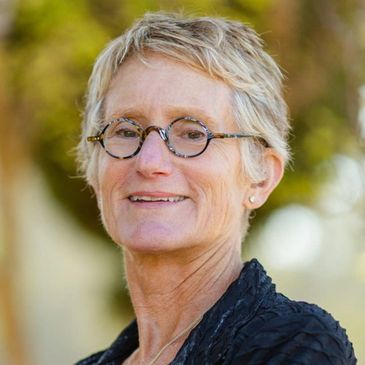
Catherine B. Cramer
Catherine B. Cramer
Catherine B. Cramer
Dr. Catherine Cramer is CUNY Advanced Science Research Center Civic Science Fellow. She works at the intersection of data-driven science and learning as it pertains to the understanding of complexity and its application to data and network sciences. She develops tools and programs for the teaching and learning of complex network and d
Dr. Catherine Cramer is CUNY Advanced Science Research Center Civic Science Fellow. She works at the intersection of data-driven science and learning as it pertains to the understanding of complexity and its application to data and network sciences. She develops tools and programs for the teaching and learning of complex network and data science. Her research is focused on participatory design and its role in STEM engagement with under-served and marginalized communities. She is a founder of the Network Literacy and Network Science in Education movements, is on the Board of the Network Science Society, and is co-editor of the Springer volume Network Science in Education. Before coming to the CUNY Advanced Science Research Center she was Deputy Director of the West Big Data Innovation Hub and Director of Outreach and Engagement for Data Initiatives at the San Diego Supercomputer Center, UC San Diego
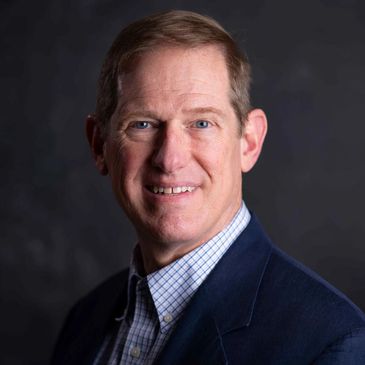
David Stifel
Catherine B. Cramer
Catherine B. Cramer
Dr. David Stifel is the Charles A. Dana Professor and Head of the Economics Department at Lafayette College. He is a development economist with research interests in poverty, water & agriculture, agricultural markets and rural infrastructure. He has lived in Madagascar working with Cornell University and the World Bank; in Ethiopia with t
Dr. David Stifel is the Charles A. Dana Professor and Head of the Economics Department at Lafayette College. He is a development economist with research interests in poverty, water & agriculture, agricultural markets and rural infrastructure. He has lived in Madagascar working with Cornell University and the World Bank; in Ethiopia with the International Food Policy Research Institute (IFPRI); and in Sri Lanka with the International Water Management Institute (IWMI). His work has been published in such journals as Global Environmental Change, World Development, American Journal of Agricultural Economics, Agricultural Economics, Journal of Development Studies, Economics and Human Biology, and Food Policy. Prof. Stifel earned his B.A. from Colgate University, his M.A. from the Johns Hopkins School of Advanced International Studies (SAIS), and his Ph.D. in Economics from Cornell University.
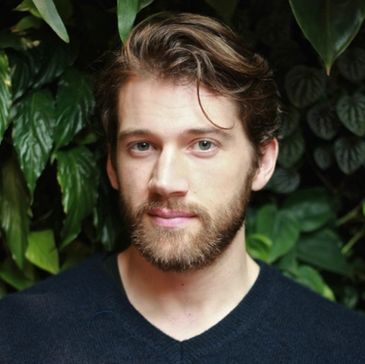
Christopher Moore
Christopher Moore
Christopher Moore
Christopher Moore is Program Manager for the International Science Reserve (ISR), an initiative of the New York Academy of Sciences, where he supports global scientific preparedness and crisis response. He brings more than 15 years of international leadership experience across the public and private sectors, including humanitarian work wi
Christopher Moore is Program Manager for the International Science Reserve (ISR), an initiative of the New York Academy of Sciences, where he supports global scientific preparedness and crisis response. He brings more than 15 years of international leadership experience across the public and private sectors, including humanitarian work with the International Rescue Committee supporting refugees from the Syrian Civil War, service as a Special Operations Intelligence Officer in the United States Air Force, and international volunteer work in the Ukraine conflict.
Chris’s work is driven by a focus on preparedness, rapid response, and cross-border collaboration. At ISR, he is dedicated to building a global community of scientists, strengthening partnerships with public and private institutions, and developing practical tools, training frameworks, and best practices that enable scientific expertise to be mobilised quickly and effectively when crises emerge.
Gillian Bayne
Christopher Moore
Christopher Moore
Dr. Gillian Bayne is a professor of Science Education at Lehman College of the City University of New York (CUNY), and holds a dual appointment in the Urban
Education Department at the CUNY Graduate Center. She brings to The Next
Generation Global Collaboratory, Inc. over thirty years of science education
experience, which have helped to dee
Dr. Gillian Bayne is a professor of Science Education at Lehman College of the City University of New York (CUNY), and holds a dual appointment in the Urban
Education Department at the CUNY Graduate Center. She brings to The Next
Generation Global Collaboratory, Inc. over thirty years of science education
experience, which have helped to deepen the theoretical and ethical
underpinnings of her pedagogical enactment and scholarly work. Dr. Bayne has
worked with and has supported beginning, seasoned and pre-service science teachers, as well as science and urban education doctoral students. Her
research is grounded in sociocultural theory and utilizes qualitative and
quantitative methodologies that afford understandings of STEM equity challenges
locally, nationally and internationally. Her work calls for the need to rethink
current paradigms that can negatively impact the advancement of youth and
STEM professionals throughout the world. Dr. Bayne has served as a Lead
Educator for the Training, Education, and Public Engagement in the GLOBE
program and has been a PI/Co-PI on multiple NASA and NSF grants. She has
published in highly respected scholarly venues, including Learning Environments
Research, Cultural Studies of Science Education, the Journal of Multicultural
Education, and the International Handbook of Research on Multicultural Science
Education.
Maina Muniafu
Christopher Moore
Maina Muniafu
Maina Muniafu is an Associate Professor of Natural Sciences in the School of Pharmacy
and Health Sciences at the United States International University – Africa based in
Nairobi, Kenya.
He is the Chair of CitSci Africa Association and Vice Chair of the Citizen Science Global
Partnership (CSGP). He holds a PhD in Botany (Plant Ecophysiology)
Maina Muniafu is an Associate Professor of Natural Sciences in the School of Pharmacy
and Health Sciences at the United States International University – Africa based in
Nairobi, Kenya.
He is the Chair of CitSci Africa Association and Vice Chair of the Citizen Science Global
Partnership (CSGP). He holds a PhD in Botany (Plant Ecophysiology) and a Master of Science in Plant Physiology and Biochemistry and has been actively teaching and
researching in the area of environmental sustainability (in particular the energy-water-food
nexus) for the past 30 years.
Community efforts have targeted lifting the livelihoods of youth in the low income areas
of the capital city Nairobi by involving them in finding entrepreneurship solutions through
innovative nature based solutions in their immediate environments.
He also serves on the Editorial Board of the Citizen science impact assessment and
evaluation journal.
Dixon Butler
Christopher Moore
Maina Muniafu
Dixon Butler, Founder and President of YLACES, is a consultant on a wide range of science-related areas. His deep expertise includes science, information system management, satellite mission planning, STEM and environmental education, budget and appropriations, remote sensing, energy, environment, nuclear, and space policy.
Following
Dixon Butler, Founder and President of YLACES, is a consultant on a wide range of science-related areas. His deep expertise includes science, information system management, satellite mission planning, STEM and environmental education, budget and appropriations, remote sensing, energy, environment, nuclear, and space policy.
Following a public school education in Richmond, Virginia, he attended Harvard (AB ’71, AM, ’71) and Rice Universities (MS, ’74; PhD, ’75). His research focus was atmospheric photochemical modeling first of planetary ionospheres and subsequently of stratospheric ozone depletion. At NASA, he had an early transition from research to serving as a science program manager. He received the 1979-80 American Physical Society Congressional Science Fellowship. Afterwards he returned to NASA Headquarters where he managed stratospheric and solar-terrestrial research, led the planning of the Earth Observing System (EOS), and went on to lead a division with responsibility for all NASA Earth science mission operations and data systems including the development of EOS Data and Information System.
In 1996, he joined the leadership team of the GLOBE Program. Dixon served as GLOBE’s third Chief Scientist and eventually as Deputy Director and Director. In 2003, Butler joined the Democratic staff of the House Committee on Appropriations, serving as minority clerk of the Energy and Water Subcommittee until 2006 and then as majority clerk in 2007. He then worked on the Commerce, Justice, Science subcommittee with responsibility for the appropriations accounts of NASA and NSF. He retired from federal service in January 2011 and began consulting with a primary focus on NASA and its continuing operation of GLOBE.
Ricardo Toledo-Crow
Ricardo Toledo-Crow
Ricardo Toledo-Crow
Ricardo Toledo-Crow is a polytechnologist and expert in bridging science and engineering to advance biomedical research, medical devices, and biophotonics. He brings broad experience across academia and industry, leading research and development of advanced instrumentation for biology, medicine, and in-vivo studies.
Ricardo is Co-Founder
Ricardo Toledo-Crow is a polytechnologist and expert in bridging science and engineering to advance biomedical research, medical devices, and biophotonics. He brings broad experience across academia and industry, leading research and development of advanced instrumentation for biology, medicine, and in-vivo studies.
Ricardo is Co-Founder and CTO of ColdSteel Laser Inc., where he is developing a micro-robotic surgical platform in collaboration with the Head & Neck Service at Memorial Sloan Kettering Cancer Center. He has managed multi-institutional collaborations with The Rockefeller University and Weill Cornell Medicine, resulting in patents and peer-reviewed publications.
Specialising in microscopy and optical systems, Ricardo developed the first video-rate acousto-optic multiphoton microscope, UV micro-scanners for optogenetics, and analytical instrumentation for peptide profiling using MALDI-TOF systems. He holds a PhD in Physics and Optics with a focus on near-field microscopy and has successfully translated laboratory technologies to commercial products in industry.
Tom Pyke
Ricardo Toledo-Crow
Ricardo Toledo-Crow
Tom Pyke, Founding Director of The GLOBE Program, led a talented team of educators, scientists, technical experts, and others to create GLOBE as a real environmental science and education program as an international partnership. GLOBE has withstood many challenges and grown in scope over the last 30 years.
He is an engineer and a scientis
Tom Pyke, Founding Director of The GLOBE Program, led a talented team of educators, scientists, technical experts, and others to create GLOBE as a real environmental science and education program as an international partnership. GLOBE has withstood many challenges and grown in scope over the last 30 years.
He is an engineer and a scientist and an author, and has led several organizations, including the National Environmental Satellite, Data, and Information Service (NESDIS) as Assistant Administrator of NOAA, guiding the Nation’s civil weather satellite program and its principal environmental data centers. He was Director of the Center for Computer Systems Engineering at the National Bureau of Standards (now NIST), leading research and standards development in computer networking, systems, and software. He has been the Chief Information Officer of the Department of Energy, the Department of Commerce, and NOAA. He earned a BS in Electrical Engineering from Carnegie Tech (now CMU) as a Westinghouse Scholar and an MSE from the University of Pennsylvania as a Ford Foundation Fellow. He is a senior member of the IEEE, and he was on the Board of Directors of the IEEE Computer Society. He is a member of Eta Kappa Nu, Sigma Xi, and Omicron Delta Kappa, and he is a Fellow of the Washington Academy of Sciences, from which he received the Engineering Sciences Award.
Izzy Crawford
Ricardo Toledo-Crow
Izzy Crawford
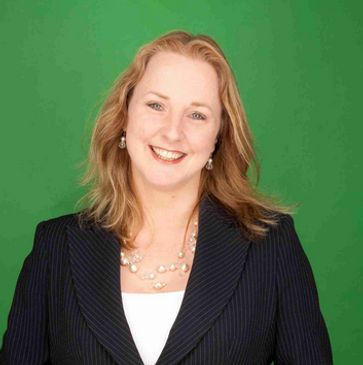
Dr. Izzy Crawford PhD FCIPR is Associate Dean for Economic, Social and Cultural Development at Aberdeen Business School, part of Robert Gordon University. With over 20 years’ experience in higher education, she has held a range of senior academic and strategic leadership roles, including Academic Strategic Lead and Senior Lecturer, and pr
Dr. Izzy Crawford PhD FCIPR is Associate Dean for Economic, Social and Cultural Development at Aberdeen Business School, part of Robert Gordon University. With over 20 years’ experience in higher education, she has held a range of senior academic and strategic leadership roles, including Academic Strategic Lead and Senior Lecturer, and previously served as Subject Leader for Public Relations, Media and Journalism. Her work focuses on strengthening the role of universities in driving inclusive economic growth, social innovation, and cultural development.
Internationally, Dr. Crawford has extensive experience working across global education, research, and professional networks, contributing to initiatives that connect higher education with international economic, social, and cultural agendas. A Fellow of the Chartered Institute of Public Relations (FCIPR), she brings a global perspective to strategic communication, media, and public relations, and is recognised for her commitment to international collaboration, knowledge exchange, and translating academic expertise into real-world impact.
Oran Young
Ricardo Toledo-Crow
Izzy Crawford
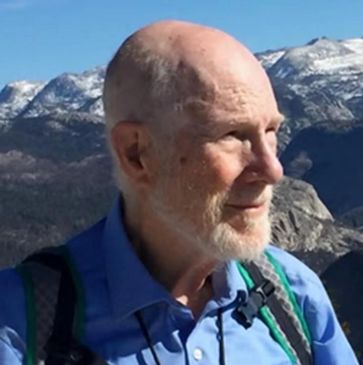
Professor Oran Young is professor emeritus and co-director of the Program on Governance for Sustainable Development at the Bren School of Environmental Science & Management at the University of California Santa Barbara. His research focuses on theoretical issues relating to the roles social institutions play as elements of governance
Professor Oran Young is professor emeritus and co-director of the Program on Governance for Sustainable Development at the Bren School of Environmental Science & Management at the University of California Santa Barbara. His research focuses on theoretical issues relating to the roles social institutions play as elements of governance systems, with applications to the atmosphere, the oceans, and the polar regions. He also does comparative research on environmental governance processes in China and the United States. Dr. Young served for six years as founding chair of the Committee on the Human Dimensions of Global Change of the US National Academy of Sciences. He chaired the Scientific Steering Committee of the international project on the Institutional Dimensions of Global Environmental Change (IDGEC). He was a founding co-chair of the Global Carbon Project and from 2005 to 2010 chaired the Scientific Committee of the International Human Dimensions Programme on Global Environmental Change. An expert on Arctic issues, Dr. Young chaired the Steering Committee of the Arctic Governance Project and is the senior counselor to the North Pacific Arctic Conference. Past service in this realm includes co-chair of the Working Group on Arctic International Relations, co-chair of the NAS Committee on Arctic Social Science, member of the US Polar Research Board, founding board member of the Arctic Research Consortium of the United States, vice-president of the International Arctic Science Committee, chair of the Board of Governors of the University of the Arctic, consultant to the Standing Committee of Parliamentarians of the Arctic Region, and co-chair of the 2004 Arctic Human Development Report. Dr. Young holds honorary doctorates from UiT the Arctic University of Norway and the University of Lapland. He is the author or co-author of more than 30 books. His recent books include: Governing Complex Systems: Social Capital for the Anthropocene, and Grand Challenges of Global Governance: Global Order in Turbulent Times.

J. Alex Albarracín
J. Alex Albarracín
J. Alex Albarracín
J. Alex Albarracín, MBA is a high-achieving finance and investments professional with experience across both public and private sectors, including domestic and international business environments at boutique firms and global financial institutions. He is currently pursuing dual graduate degrees, including an MBA from the University of
J. Alex Albarracín, MBA is a high-achieving finance and investments professional with experience across both public and private sectors, including domestic and international business environments at boutique firms and global financial institutions. He is currently pursuing dual graduate degrees, including an MBA from the University of Miami and a Master’s degree from Cornell University, with academic focuses spanning global finance, capital markets, investment banking, and real estate.
Alex earned his Bachelor’s in Finance magna cum laude (top 1%) from Rutgers University and brings an exceptional record of leadership and academic distinction. He proudly serves as a Board Member and is a Clinton Foundation Fellow, ULI Etkin Scholar, and ALPFA Scholar—recognitions that reflect his commitment to excellence, service, and inclusive leadership.
He is also a Toigo and Jumpstart Fellow and brings a global perspective shaped by international study through Semester at Sea. Continuously evolving in finance, real estate, investments, and strategy, Alex is building a strong global network to serve as a thoughtful advisor and future investor. Outside of his professional work, he enjoys squash, cycling, golf, running, globe-trotting, and volunteer teaching and mentoring.
Derek Tesser
J. Alex Albarracín
J. Alex Albarracín
Derek Tesser is a Senior Research Scientist at Saint Louis University’s Remote Sensing Lab, where he leverages multi-sensor data—including radar, lidar, and optical/IR—to analyze terrestrial ecosystem functioning. His research addresses global conservation priorities, from mapping forest disturbances in tropical and boreal biomes to quant
Derek Tesser is a Senior Research Scientist at Saint Louis University’s Remote Sensing Lab, where he leverages multi-sensor data—including radar, lidar, and optical/IR—to analyze terrestrial ecosystem functioning. His research addresses global conservation priorities, from mapping forest disturbances in tropical and boreal biomes to quantifying greenhouse gas emissions within the agriculture and livestock sectors. A collaborator with NASA’s Jet Propulsion Laboratory, Derek has contributed to the ECOSTRESS mission and currently supports calibration and validation efforts in the Amazon for the NISAR mission. Beyond his research, Derek is a dedicated educator and curriculum architect. While helping launch a new college within the City University of New York (CUNY) system, he designed foundational biology, chemistry, and environmental science curricula. He also spearheaded international study abroad programs, leading field expeditions across diverse tropical ecoregions. These initiatives fostered collaboration between scientists, students, and local communities, utilizing GLOBE protocols to integrate essential field-based observations with drone and satellite data to advance biodiversity science and ecosystem conservation.
Lise Korsten
J. Alex Albarracín
Richard Lawford
Professor Lise Korsten is the President of the African Academy of Sciences (AAS), serving a three-year term from 2023 to 2026. She is the Co-Director of the Department of Science and Innovation, Centre of Excellence in Food Security. She is also responsible for the food safety and regulatory control programmes within the DSI-NRF Centr
Professor Lise Korsten is the President of the African Academy of Sciences (AAS), serving a three-year term from 2023 to 2026. She is the Co-Director of the Department of Science and Innovation, Centre of Excellence in Food Security. She is also responsible for the food safety and regulatory control programmes within the DSI-NRF Centre of Excellence in Food Security and actively interacts with other researchers in various institutes. She holds the position of chair in the Global Task Force of Food Security for the International Society for Plant Pathology. Prof Korsten has addressed the South African Parliament on Food Safety Control and has developed a national framework for government to develop a Food Control Authority.
She has been able to attract extensive national and international long term funding such as the Water Research Commission solicited research projects “Measurement of water pollution determining the sources and changes of microbial contamination and impact on food safety from farming to retail level for fresh vegetables”, “An investigation into the link between water quality and microbiological safety of fruit and vegetables from the farming to the processing stages of production and marketing” and “Evaluation of the risks associated with the use of rain water harvested from roof-tops for domestic use and homestead food gardens, and groundwater for domestic use and livestock watering”, as well as the 7th EU Framework project “Impact of climate change and globalisation on safety of fresh produce - governing a supply chain of uncompromised food sovereignty.
Prof Korsten developed South Africa's first biocontrol agent for fruit and established a biocontrol research group at the University of Pretoria (1992). She has also established a fresh produce health group that focusses on food safety of fresh produce and on Sanitary and Phytosanitary aspects related to international trade.
Prof Korsten has focussed her research mainly on the complementary fields of postharvest technology and food safety as related to international trade in fresh produce. As a team the Plant Health and Safety research group has been able to develop several innovative technologies to reduce disease and prevent product contamination. The value of her research programmes (Produce Quality and Safety (PQS) and Postharvest Innovation Research) is best illustrated by sustained industry financial support, intensive student training and publications. Prof Korsten has established a core of researchers and support staff that has been with her for the past 20 years totally funded by the Industry. She has supervised 51 MSc students, 20 PhD students and 11 Postdocs.
Richard Lawford
J. Alex Albarracín
Richard Lawford
Richard (Rick) Lawford currently is an Associate at the University of North Dakota (Water Research Center, Engineering Department), lead for the Group of Earth Observations (GEO)’s EO4WEF (Earth Observation for the Water-Energy-Food Nexus) Project. and part time consultant. His career has included research, science management and data iss
Richard (Rick) Lawford currently is an Associate at the University of North Dakota (Water Research Center, Engineering Department), lead for the Group of Earth Observations (GEO)’s EO4WEF (Earth Observation for the Water-Energy-Food Nexus) Project. and part time consultant. His career has included research, science management and data issues. Until 2021, he worked as a part time Senior Scientist at Morgan State University where he supported NASA water programs and the Japan Aerospace Exploration Agency (JAXA) by coordinating GEO water activities and providing lectures and articles on the applications of satellite data in water management. He also undertook contract work related to satellite data and Sustainable Development for WHO, led a WEF Nexus study for Future Earth, and worked as the Network Manager for the Drought Research Initiative at the University of Manitoba. Previously, he served 4 years as the Director of the Global Energy and Water Cycle Experiment (GEWEX) Project office and 7 years as a program manager in NOAA for the GEWEX Continental International Project (GCIP) worked with others to develop the GEWEX Americas Prediction Project (GAPP) and the USGCRP Global Water Cycle Program.
Prior to moving to the USA in 1995, he established and led the Hydrometeorological Research Division at NHRC in Saskatoon Saskatchewan. This challenge followed seven years in policy-related positions in Ottawa including the Ministry of State for Science and Technology where he explored applications of remote sensing in Canada’s resource sectors, the Wright Task Force on Federal Policies and Programs for Technology Development, managed the planning and evaluation functions for Canada’s Inland Water Directorate, served as a Carbon Dioxide Advisor for the Canadian Department of Energy and as a Science Policy advisor in Environment Canada’s Corporate Planning Group. Before moving to Ottawa, he worked in Toronto as the Chief of Scientific Services for the Ontario Region of Atmospheric Environment Service (AES) which included managing climatological services, applied climate research and regional data services. He also worked as an instructor for new meteorologists becoming AES weather forecasters, and as a research meteorologist in cloud physics. The earlier part of his career/development was spent in academic studies at the Universities of Manitoba (Brandon College), Alberta, and McGill in Montreal. He also worked as a analyst at the Canadian Meteorological Centre (Montreal) as well as spending a year and a half as a forecaster/briefer after completing post-graduate training as a Meteorological Officer.
Experiences from different aspects of his work history prepare him for contributing to this Collaboratory including the development of extensive reports by coordinating writing teams (e.g., the GEO Water Strategy), providing inputs, briefings and reviews for different levels of government, and helping to create opportunities and build support for new activities and programs. His 20 years of experience in GEO activities during and after his employment with space agencies should be of benefit, since corporate GEO goals tend to be aligned with those of this Collaboratory.
Alex de Sherbinin
Alex de Sherbinin
Alex de Sherbinin
Dr. Alex de Sherbinin is director of CIESIN and a Senior Research Scientist in the Columbia Climate School. He is a geographer whose research interests focus on the human aspects of global environmental change and geospatial data applications, integration, and dissemination. He has authored or co-authored more than 75 journal articl
Dr. Alex de Sherbinin is director of CIESIN and a Senior Research Scientist in the Columbia Climate School. He is a geographer whose research interests focus on the human aspects of global environmental change and geospatial data applications, integration, and dissemination. He has authored or co-authored more than 75 journal articles, and is the lead author of articles appearing in Annual Reviews of Environment and Resource, Climatic Change, Environmental Research Letters, Global Environmental Change, Science, and Scientific American. He serves as section chief editor on Climate Mobility for Frontiers in Climate. His research centers on climate vulnerability mapping; climate change and migration; environmental indicators; citizen science data; and remote sensing applications. He is a co-author of the World Bank’s Groundswell report series, and the biennial Environmental Performance Index (EPI), and teaches in Columbia’s Climate & Society and Sustainability Science master’s degree programs. He has served as a principal investigator on projects totaling more than $37 million from funding sources that include NASA, USAID, DOD, the World Bank, and various UN agencies and foundations.
Dr. de Sherbinin currently serves as a Council member of the American Geographical Society (AGS), and served as a member then chair of the World Data System (WDS) scientific committee from 2015 to 2022. He has served on many other scientific and advisory committees for data and research programs in the US and Europe.
Alex de Sherbinin holds a PhD in geo-information science and Earth observation from ITC at the University of Twente (Netherlands), and MA and BA degrees in geography from Syracuse University and Dartmouth College, respectively. Prior to joining CIESIN, he served as a USAID-funded Population-Environment Fellow with the Social Policy Program of International Union for the Conservation of Nature (IUCN, Gland, Switzerland), and a Population Geographer at the Population Reference Bureau (PRB, Washington DC).
He has profiles on ResearchGate and LinkedIn, and blog postings through the Earth Institute’s State of the Planet blog. A full list of articles is available on ORCID. See also Dr. de Sherbinin's profile on Columbia Climate School's main website.
Marion Keim
Alex de Sherbinin
Alex de Sherbinin
Prof. Marion Keim is the UNESCO Chair of Sport, Development and Peace (SDP) and Olympic Education based at the University of the Western Cape. Her teaching and research and community engagement areas focus on sport and development, leadership, conflict transformation, multiculturalism, youth development and sport as a means for social t
Prof. Marion Keim is the UNESCO Chair of Sport, Development and Peace (SDP) and Olympic Education based at the University of the Western Cape. Her teaching and research and community engagement areas focus on sport and development, leadership, conflict transformation, multiculturalism, youth development and sport as a means for social transformation and peace building.
She is the Chairperson of the Foundation for Sport, Development and Peace and an Advocate of the High Court of South Africa, certified in Mediation and Sports Law. She has coordinated numerous national and international sport and development projects for UNESCO, IOC, IPC, GIZ, FIFA and the Commonwealth.
Prof. Marion Keim served as member of the National Advisory Committee for Sport and of the Eminent Person’s Group for Sport and Transformation for the Minister of Sport in South Africa and on the Education and Training Commission of the South African Sports Confederation and Olympic Committee.
Since 2014 she has served on the IOC Education Commission and as President of the South African Pierre de Coubertin Committee.In 2024 she was elected Secretary General of the Association of National Pierre de Coubertin Committees of Africa. She was also elected Chairperson for Sportanddev in 2024 as well as the Co-chair of UNESCO’s global Fit for Life Knowledge Innovation Network. Marion facilitates and lectures globally, she is the author, co-author, compiler and editor of more than 30 books and serves on numerous international Sport Peace and Education boards.
Deborah Hecht
Alex de Sherbinin
Divine Ntiokam
Deborah Hecht, Ph.D. is the Director and Senior Research Scientist at the Center for Advanced Study in Education at The Graduate Center. She is particularly interested in evaluation and development of educational programs and innovations, STEM education, service-learning, character education and charter schools. Dr. Hecht has been the lea
Deborah Hecht, Ph.D. is the Director and Senior Research Scientist at the Center for Advanced Study in Education at The Graduate Center. She is particularly interested in evaluation and development of educational programs and innovations, STEM education, service-learning, character education and charter schools. Dr. Hecht has been the lead evaluator on numerous NSF projects focusing on interconnected STEM learning and engineering pedagogy, technician education, experiential learning, undergraduate research, and culturally responsive pedagogy. She has also been locally and nationally involved in development and study of service-learning as an educational pedagogy and promoting character education in schools. In 1994 she was a co-founder of one of the first charter schools in NJ.
Current evaluation and research work is in areas including developing educational innovations, STEM education, youth development, career/college pathways, culturally responsive pedagogy, college retention, workforce development, informal learning, educator faculty development, college/industry partnerships.
Divine Ntiokam
Alex de Sherbinin
Divine Ntiokam
Mr. Divine Ntiokam the Founder and Executive Director of GCSAYN. He recognizes the critical importance of young people in building a resilient, sustainable, and prosperous agricultural sector in Africa and around the world. This passion led him to establish the Climate Smart Agriculture Youth Network Global (GCSAYN) in May 2014
Mr. Divine Ntiokam the Founder and Executive Director of GCSAYN. He recognizes the critical importance of young people in building a resilient, sustainable, and prosperous agricultural sector in Africa and around the world. This passion led him to establish the Climate Smart Agriculture Youth Network Global (GCSAYN) in May 2014.
Teams in over 178 countries work to raise awareness about Climate Smart Agriculture among young men and women, educating them on the benefits of sustainable practices in increasing agricultural yields and resilience.
It should be noted that implementation of activities is being spearheaded by over 88 GCSAYN Approved Centers of Excellence, based in Primary and Secondary Schools, Universities and TVETs globally.
Alongside his role at GCSAYN, Divine was elected as the African Continental Vice President of Youth in the Livestock, Fisheries, and Aquaculture Incubation Network in July 2018. He was also nominated as one of the Food and Land Use (FOLU) Coalition International Ambassadors in 2018.
In addition, Divine is a Core Member of the Strategy Group on Sustainable Agriculture and Food Systems at the Africa Europe Foundation. In 2021, he moderated one of the World Food Prize Foundation’s Global Youth Institute Roundtables.
To sum up, Divine is currently supporting the World Food Prize Foundation in the recruitment of High school students or youth aged 13-18 years from across the globe for the Virtual Youth Institute (VYI) in 2025. This has led him to become one of the World Food Prize Foundation Global Youth Institute Roundtable Experts. At the most recently ended World Food Prize Borlaug dialogue, he served as a panelist and hosted a successful Workshop titled: “Advancing Climate-Smart Agriculture” with 35 students Borlaug Fellows held in Des Moines, Iowa.
More so, due to his active participation in rolling out Centers of Excellence across the United States, lately engaged with the GLOBE Program where he supported the 24-hour relay in June 2025.
Furthermore, he is an active member of the International Union for Conservation of Nature (IUCN) Commission on Education and Communication (CEC), Climate Crisis Commission (CCC), Commission on Ecosystem Management (CEM), Commission on Environmental, Economic and Social Policy (CEESP), Member for the Society for the Psychological Study of Social issues (SPSSI) and Society of Petroleum Engineers (SPE). He has served as a Judge for the Ohio Academy of Science in supporting the Science Fair 2025 for the City of Columbus and State of Ohio. He is also a member of the Society of Petroleum Engineers (SPE).
Divine’s entrepreneurial spirit and advocacy for greater inclusivity are well-established. His background includes extensive experience in youth mainstreaming, notably coordinating and facilitating the translation of the Sustainable Development Goals into over sixty local languages across Africa and Asia to ensure that “No One Is Left Behind”. Furthermore, in 2020, the UN Special Envoy to the Food Systems Summit 2021 appointed Divine as one of the Champions to help implement the UN Secretary General’s vision for the “Decade of Action.”
Through business incubation and strong networks of support, the Network aims to build an Africa where youth-owned enterprises in animal resources contribute to poverty reduction and food security.
In 2025 Divine was recognized by 8 different organizations for his work with the youth, climate-smart agriculture, scientific awareness and helping develop scientific temper among youth.
Kyle McDonald
Blythe Adamson
Kyle McDonald
Dr. Kyle C. McDonald is the Terry Elkes Professor and Department Chair of the Earth and Atmospheric Sciences Department at The City College of New York. He joined City University in 2011 having developed a distinguished 20-year career in the Science Division of NASA’s Jet Propulsion Laboratory, California Institute of Technology, in
Dr. Kyle C. McDonald is the Terry Elkes Professor and Department Chair of the Earth and Atmospheric Sciences Department at The City College of New York. He joined City University in 2011 having developed a distinguished 20-year career in the Science Division of NASA’s Jet Propulsion Laboratory, California Institute of Technology, in Pasadena, California. At JPL, he supported NASA’s Earth Science program as Principal and Co-Investigator on numerous Earth science investigations involving remote sensing of terrestrial ecosystems and the cryosphere. At the Graduate Center, Professor McDonald is affiliated with the doctoral faculties of both the Earth and Environmental Science (EES) and the Ecology, Evolutionary Biology, and Behavior (EEB) programs. He is a Faculty Affiliate at the CUNY Advanced Science Research Center (ASRC) where he maintains strong collaborations with the CUNY Environmental Initiative, and he is Associate Director for Research of the CUNY CREST Institute, having long-standing collaborations with the NOAA CREST Center. He is Co-Director of CCNY’s Environmental Earth System Science (EESS) program and also actively engaged with CCNY’s MS program in Sustainability in the Urban Environment. Professor McDonald maintains a Faculty Part-Time position in the Carbon Cycle and Ecosystems Group at the Jet Propulsion Laboratory and is a Project Scientist at UCLA’s Joint Institute for Regional Earth System Science and Engineering (JIFRESSE).
Jack Kaye
Blythe Adamson
Kyle McDonald
Dr. Jack Kaye is a retired senior executive from the National Aeronautics and Space Administration, where he served for more than 25 years as Associate Director for Research in the Earth Science Division of NASA’s Science Mission Directorate. Over a distinguished 41-year career at NASA, he led the agency’s Earth science research and data
Dr. Jack Kaye is a retired senior executive from the National Aeronautics and Space Administration, where he served for more than 25 years as Associate Director for Research in the Earth Science Division of NASA’s Science Mission Directorate. Over a distinguished 41-year career at NASA, he led the agency’s Earth science research and data analysis programs, advancing understanding of Earth system processes and climate.
Dr. Kaye began his career as a space scientist at NASA’s Goddard Space Flight Center and later managed NASA’s Atmospheric Chemistry Modeling and Analysis Program. He has represented NASA in numerous interagency and international science initiatives and has published more than 50 peer-reviewed papers.
He holds a Ph.D. in chemistry from the California Institute of Technology and a B.S. from Adelphi University. His honors include NASA’s Distinguished Service Medal (2022) and the NASA–USGS Pecora Individual Award (2024).
Blythe Adamson
Blythe Adamson
Blythe Adamson
Blythe Adamson, PhD, MPH is a Senior Research Leader specializing in AI/LLMs for Drug Development, Health Economics, and Real-World Evidence, and is a global speaker focused on transforming healthcare through data science. An epidemiologist, economist, and real-world data expert, she previously served as Lead Data Scientist at the White
Blythe Adamson, PhD, MPH is a Senior Research Leader specializing in AI/LLMs for Drug Development, Health Economics, and Real-World Evidence, and is a global speaker focused on transforming healthcare through data science. An epidemiologist, economist, and real-world data expert, she previously served as Lead Data Scientist at the White House, helping shape critical COVID-19 response strategies, and earlier founded Infectious Economics to deliver tech-enabled solutions for outbreak prevention and business resilience.
Currently at Flatiron Health, Blythe pioneers machine learning applications that extract insights from electronic health records and leads comparative-effectiveness studies that inform healthcare policy. Passionate about applying AI to complex healthcare challenges, she bridges data science and public health to accelerate medical innovation, improve patient outcomes, and build cross-border collaborations through public-private partnerships.
Bridie Schultz
Blythe Adamson
Blythe Adamson
Dr Bridie Schultz is a specialist in STEM education, program design and social impact, with experience developing and delivering initiatives that strengthen scientific capability and participation across schools, communities and scientific industries. She is the co-Founder of teachSTEM, an Australian charity focused on ensuring peo
Dr Bridie Schultz is a specialist in STEM education, program design and social impact, with experience developing and delivering initiatives that strengthen scientific capability and participation across schools, communities and scientific industries. She is the co-Founder of teachSTEM, an Australian charity focused on ensuring people from all backgrounds have access to the skills needed to engage with science, technology and environmental decision-making.
Bridie is also a Director of Sativus and Essential Skills for Science, where she works at the intersection of research, education, and industry to support practical problem-solving, leadership development, and inclusive innovation. With a PhD in the riogenology and a Masters in STEM Education, Bridie’s work spans citizen science, authentic assessment, and professional development for scientists and educators, with partnerships including government agencies, universities, and international science organizations. She brings experience in governance, program strategy, and cross-sector collaboration to the NextGen Globe Board.
Rusty Low
Martin Brocklehurst
Neal Philip
Rusty Low is a senior scientist at the Institute of Global Environmental Strategies (IGES), where her work centers on citizen science, environmental monitoring, and vector-borne disease. She served as Deputy Director for Science at the GIO and has held multiple leadership roles within the The GLOBE Program since 2001, most recently as Sc
Rusty Low is a senior scientist at the Institute of Global Environmental Strategies (IGES), where her work centers on citizen science, environmental monitoring, and vector-borne disease. She served as Deputy Director for Science at the GIO and has held multiple leadership roles within the The GLOBE Program since 2001, most recently as Science Lead for the GLOBE Observer Mosquito Habitat Mapper.
Rusty’s interdisciplinary career spans archaeology, palaeo-climate research, and applied environmental science, with a strong focus on using mobile technologies and open data to track mosquito disease vectors. She is a former Fulbright Scholar in Brazil (2021–22), a Fulbright Specialist, and a UNITAR Global Diplomacy Fellow. Dr. Low earned her PhD at the University of Minnesota and currently lives in Colorado.
Neal Philip
Martin Brocklehurst
Neal Philip
Neal Philip is Chairperson and Professor in the Department of Chemistry, Earth Sciences, and Environmental Sciences at CUNY Bronx Community College. A passionate educator and interdisciplinary scientist, Professor Philip brings extensive academic and professional experience across chemistry, meteorology, environmental engineering, and ST
Neal Philip is Chairperson and Professor in the Department of Chemistry, Earth Sciences, and Environmental Sciences at CUNY Bronx Community College. A passionate educator and interdisciplinary scientist, Professor Philip brings extensive academic and professional experience across chemistry, meteorology, environmental engineering, and STEM education.
His work centers on experiential, project-based learning that empowers students to address real-world sustainability challenges. He has led sustainability-focused study abroad programs in India, Spain, and Australia, where students have installed weather stations, conducted micro-scale climate and pollution monitoring using backpack-based systems, and engaged in STEM-driven cross-cultural collaboration.
Professor Philip’s areas of expertise include weather station installation and monitoring, greenhouse gas measurement for climate change research, atmospheric pollution assessment, smart city analytics, STEM curriculum development, and water/wastewater treatment design. Through innovative teaching and global engagement, he is committed to preparing the next generation of scientists and engineers while advancing practical solutions for environmental resilience.
Mark Bretteny
Martin Brocklehurst
Martin Brocklehurst
Mark Brettenny serves as Director of the GLOBE Africa Coordinating Office and CEO of GIA ERD&T (Environmental Resource Development and Training). He is a dedicated leader in environmental education and capacity building, advancing STEM engagement and sustainable development across Africa.
Through his work with GIA ERD&T, Mr. Brettenny sup
Mark Brettenny serves as Director of the GLOBE Africa Coordinating Office and CEO of GIA ERD&T (Environmental Resource Development and Training). He is a dedicated leader in environmental education and capacity building, advancing STEM engagement and sustainable development across Africa.
Through his work with GIA ERD&T, Mr. Brettenny supports programs focused on environmental resource development, climate awareness, and hands-on training, helping empower educators, students, and communities with practical tools for environmental monitoring and resilience. His leadership emphasizes collaboration, skills development, and locally driven solutions to address pressing environmental challenges.
Martin Brocklehurst
Martin Brocklehurst
Martin Brocklehurst
Martin Brocklehurst is a founding member of both the Citizen Science Global Partnership (CSGP) and the European Citizen Science Association (ECSA). Currently the Chair of the Board of the CSGP and a long standing Member of ECSA he is also an active citizen scientist. Currently working as a consortium member of the EU funded Cli
Martin Brocklehurst is a founding member of both the Citizen Science Global Partnership (CSGP) and the European Citizen Science Association (ECSA). Currently the Chair of the Board of the CSGP and a long standing Member of ECSA he is also an active citizen scientist. Currently working as a consortium member of the EU funded Climate Change Project AURORA designed to show how citizens can make an active contribution to reducing atmospheric carbon levels. He is an independent environmental consultant who has worked since 2013 to foster Citizen Science Associations in Europe, Africa, Australia, and Asia. He has lectured widely on citizen science in Europe, Africa and Australia and is the main contact and adviser to the United Nations Science Policy Business Forum (UNSPBF) on citizen science. He is currently working closely with the UNEP/UNSPBF on integrating citizen science into global multilateral environmental agreements and designing the World Environment Situation Room Citizen Science Portal. During his career he worked for 13 years as a senior public-sector regulator and advisor to the UK Government, in developing and delivering UK Environmental Regulations. For 14 years previously he worked for multi-national companies in the fields of health, safety, environment, and security. He has a Masters in Nature Conservation from University College London and was one of the first ecologist to work in Local Government in the UK. He has a first degree in Geography from Swansea University. Independent Environmental Consultants (2011-22), Executive Manager UK Environment Agency (1998-2011), Senior HSE Manager Gulf Oil, Chevron, and BP (1984-1998). Professional member of CIWM, the International Solid Waste Association (ISWA), the Energy Institute and a Fellow of the RSA.
Gillian Small
Gillian Small
Gillian Small
Gillian Small, PhD is a nationally recognized academic leader, scientist, and higher education strategist with more than three decades of experience advancing interdisciplinary research, innovation, and institutional transformation. A thought leader in biomedical research and digital science education, she has championed cutting-edge sch
Gillian Small, PhD is a nationally recognized academic leader, scientist, and higher education strategist with more than three decades of experience advancing interdisciplinary research, innovation, and institutional transformation. A thought leader in biomedical research and digital science education, she has championed cutting-edge scholarship, entrepreneurship, and inclusive excellence throughout her career.
Dr. Small most recently served as President of World Science U, where she promoted global access to high-quality digital science education. Previously, she was University Provost and Senior Vice President for Academic Affairs at Fairleigh Dickinson University, leading major academic restructuring initiatives to improve efficiency, launch new schools and programs, and position the university as a forward-looking institution prepared for 21st-century challenges.
Earlier, Dr. Small served as Vice Chancellor for Research at The City University of New York (CUNY), where she built a comprehensive research infrastructure supporting innovation, entrepreneurship, and technology commercialization across the university system. She led strategic faculty hiring, fundraising, budget oversight, research compliance, bioethics initiatives, and economic development efforts. As founding executive director, she conceived and led the development of CUNY’s state-of-the-art Advanced Science Research Center, designed to foster collaboration in nanoscience, photonics, structural biology, neuroscience, and environmental sciences.
A strong advocate for women and underrepresented minorities in STEM, Dr. Small has prioritized strengthening the educational pipeline and promoting ethical standards in biomedical research and across academic curricula. She earned her Ph.D. from the University of Wolverhampton (formerly Wolverhampton Polytechnic) in the United Kingdom and completed postdoctoral studies at the University of Cambridge and Rockefeller University.
Shaikha BuAi
Gillian Small
Gillian Small
Shaikha BuAli, Ed.D is an award-winning educational leader, virtual education expert, and environmental advocate with more than a decade of experience driving academic excellence and innovation. As Chief Academic Officer at Pennsylvania Virtual Charter School, Dr. BuAli leads strategic initiatives that enhance student achievement and su
Shaikha BuAli, Ed.D is an award-winning educational leader, virtual education expert, and environmental advocate with more than a decade of experience driving academic excellence and innovation. As Chief Academic Officer at Pennsylvania Virtual Charter School, Dr. BuAli leads strategic initiatives that enhance student achievement and success in online learning environments. She holds a Doctor of Education in Educational Leadership and Organizational Management from Drexel University and has additional certifications in educational leadership, administration, and instructional areas. Passionate about experiential learning and environmental stewardship, Dr. BuAli champions outdoor science education and sustainability programs that empower youth to connect, lead, and thrive.
Nico de Klerk
Gillian Small
Nico de Klerk
Nico de Klerk, PhD is a social entrepreneur, public speaker, and educator focused on cultivating entrepreneurial mindsets and social innovation. He is an Extraordinary Lecturer at the School of Social Innovation at Huguenot College and formerly served as an Adjunct Professor of Spiritual Theology at Princeton Theological Seminary.
Nico is
Nico de Klerk, PhD is a social entrepreneur, public speaker, and educator focused on cultivating entrepreneurial mindsets and social innovation. He is an Extraordinary Lecturer at the School of Social Innovation at Huguenot College and formerly served as an Adjunct Professor of Spiritual Theology at Princeton Theological Seminary.
Nico is the Founder and CEO of the StreetBiz Foundation, leading initiatives that promote social entrepreneurship among marginalized youth in South Africa. In 2018, his flagship initiative, Long Walk for the Entrepreneurial Mindset, was awarded Best Global Social Innovative Project by Life Learning Academia on the recommendation of Edward de Bono. As part of this project, Nico walked nearly 3,000 km (1,708 miles) across South Africa, engaging more than 100 township communities and facilitating mindset-focused workshops at close to 200 schools and community groups.
A Master Trainer in Entrepreneurial Skills Development (University of the State of California), Nico is also the author of No Fit – My 1,700-Mile Walk from Apartheid. His work and message have gained international recognition, with speaking engagements across Canada, the United States, Europe, North Africa, and Russia. Drawing on lived experience, social research, and years of facilitating emotional intelligence and mindset development workshops, Nico’s talks are known for being educational, challenging, motivational, and deeply authenti
Osamu Ochiai
Gillian Small
Nico de Klerk
Osamu Ochiai, Director of the Earth Observation Research Center at the Japan Aerospace Exploration Agency (JAXA), brings extensive experience in Earth Observation (EO) satellite operations, data systems, and international collaboration. Throughout his career, he has been strongly committed to advancing the use of EO resources in support
Osamu Ochiai, Director of the Earth Observation Research Center at the Japan Aerospace Exploration Agency (JAXA), brings extensive experience in Earth Observation (EO) satellite operations, data systems, and international collaboration. Throughout his career, he has been strongly committed to advancing the use of EO resources in support of global initiatives such as the SDGs, the Paris Agreement, and the Sendai Framework for Disaster Risk Reduction.
With more than 20 years of experience in EO satellite data and information systems, Mr. Ochiai has played a leading role in promoting the use of JAXA Earth observation satellite data both in Japan and internationally. He has actively contributed to the Committee on Earth Observation Satellites (CEOS) and the Coordination Group for Meteorological Satellites (CGMS), bringing deep expertise in both meteorological and Earth observation satellites.
Mr. Ochiai also has extensive experience within the Group on Earth Observations (GEO) community. During seven years at the GEO Secretariat as an EO Architecture and Data Expert, he helped coordinate the development of the Global Earth Observation System of Systems (GEOSS) Platform, connecting more than 100 Earth observation data providers worldwide. He served as Co-Chair of the GEO Programme Board in 2018–2019, helping lead the development of the GEO Work Programme adopted by the GEO Plenary in 2019.
In addition, Mr. Ochiai serves in leadership roles for the Global Forest Observation Initiative (GFOI) and EO4SDG, and contributed CEOS input to the refinement of the 2006 IPCC Guidelines on National Greenhouse Gas Inventories related to satellite-based greenhouse gas monitoring.
Mr. Ochiai also serves as a selection panel member for GEOAWESOMENESS Top 100 world companies, drawing on his longstanding expertise in Earth observation and geospatial information systems.
He graduated from Hokkaido University with a degree in Atmospheric Science in Geophysics, where his master’s research focused on clouds and atmospheric radiation within the framework of the World Climate Research Programme (WCRP).